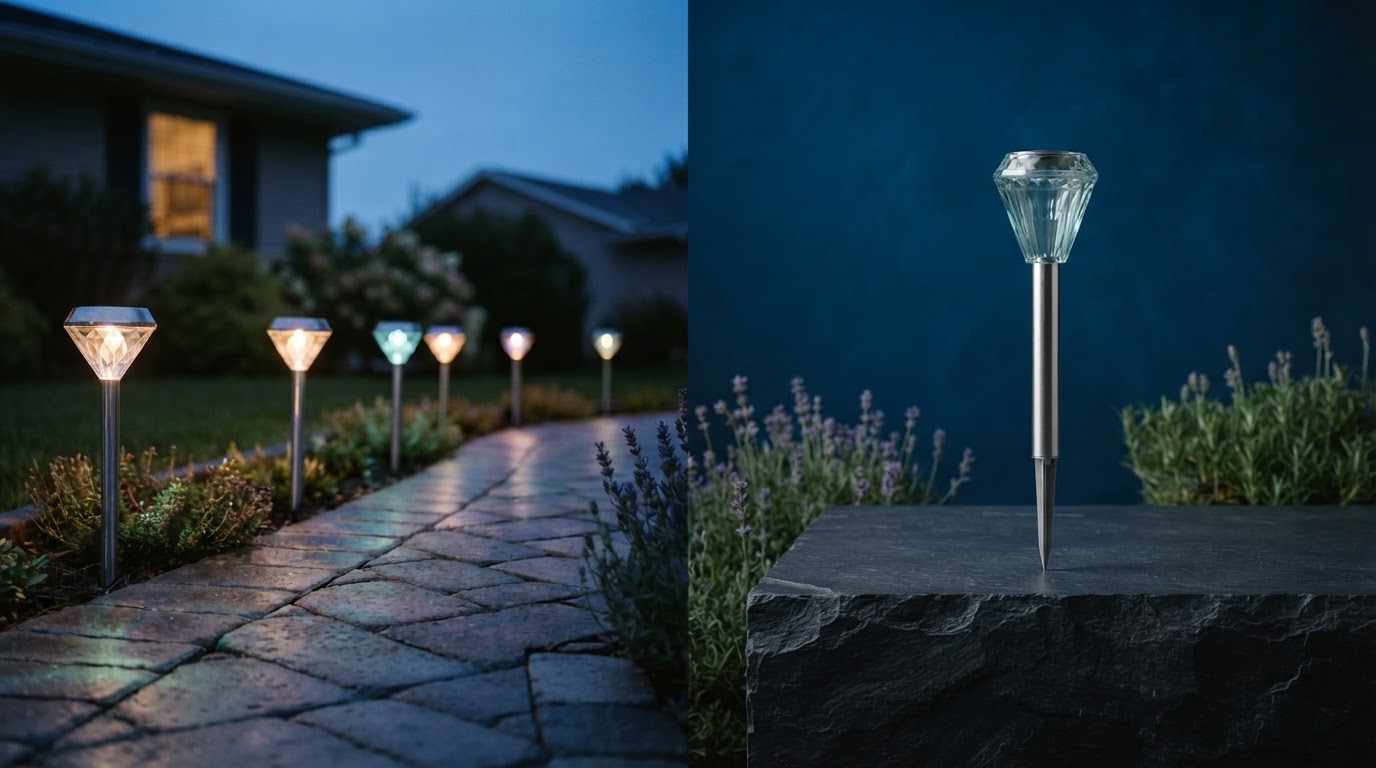
Solar Garden Color Lights for Path Navigation
 Maya ChenContributing Editor
September 14, 2026. This analysis evaluates the functional trade-offs of using color-changing solar path lights for residential wayfinding. It is written for property owners prioritizing long-term durability over temporary aesthetic trends.
The Efficiency Gap in Outdoor Path Lighting
The conventional wisdom says that all solar landscape lighting is essentially a commodity, differentiated only by price point and plastic housing design. However, this ignores the significant disparity in energy conversion between fixed-spectrum white LEDs and the multi-diode arrays found in color-changing systems. Most consumers purchasing outdoor solar lights for garden decor fail to account for the voltage requirements of driving a red-green-blue (RGB) chip versus a standard warm-white emitter. While a basic white LED might operate efficiently at 2.8 to 3.2 volts, an integrated RGB system requires sophisticated pulse-width modulation (PWM) to blend colors, which creates a continuous drain on the internal battery. Data from Reddit discussions regarding color changing solar pathway lights indicates that the primary failure point is not the LED itself, but the inability of the integrated solar panel to recover the charge spent during high-intensity color cycles. This creates a cycle of diminishing returns where the light performs well for the first ninety days but suffers from chronic under-charging as seasonal daylight hours decrease. A robust system must prioritize weatherproofing, yet many units marketed as waterproof color solar garden stakes lack the internal sealing necessary to protect the PWM controller from humidity-induced corrosion. Without a clear IP65 or higher rating, these units typically fail within one winter season regardless of their initial brightness.
Solar Garden Color Lights and Technical Integration
Solar Garden Color Lights addresses the energy deficit by utilizing high-capacity lithium-ion cells paired with monocrystalline silicon panels, which provide a higher conversion rate than the cheaper amorphous panels found in hardware store bins. Here's the part nobody talks about: the color spectrum chosen for a pathway dictates the perceived safety of the space. While rgb solar path lights offer a full spectrum, the human eye is most sensitive to green and yellow wavelengths in low-light conditions. Solar Garden Color Lights systems allow for specific color anchoring that maximizes visibility without the harsh glare of high-kelvin white light. The integration of waterproof rgb solar garden lights into a cohesive landscape design requires understanding the difference between decorative accenting and functional wayfinding. Run the math: a path light that emits 15 lumens of blue light will appear significantly dimmer than the same unit emitting 15 lumens of yellow light due to the Purkinje effect. By focusing on high-output RGB diodes, Solar Garden Color Lights ensures that even when set to cooler tones, the path remains navigable. Furthermore, the physical installation process, as detailed in the guide on how to install solar garden color lights on walkways, emphasizes the need for consistent solar exposure to maintain the battery health required for these multi-color functions. This isn't just about aesthetics; it is about ensuring the system has enough stored energy to maintain the color cycle through the early morning hours.
Decision Framework for Color-Changing Systems
Selecting a lighting system based on marketing photos is a mistake. A functional evaluation must prioritize the hardware's ability to withstand environmental stress while maintaining the integrity of the color output. When evaluating waterproof multi color solar lights, the focus should remain on the internal housing and the quality of the solar collector rather than the number of available color modes. I'll change my mind when manufacturers start providing transparent battery cycle life data for their RGB units, but until then, the following criteria serve as the baseline for a professional-grade installation:
- Verify the solar panel material; monocrystalline is mandatory for RGB systems due to higher power demands.
- Check for an IP65 or IP67 waterproof rating to prevent moisture ingress in the controller housing.
- Ensure the battery capacity is at least 1200mAh to support full-night color cycling.
- Assess the stake material; reinforced ABS or stainless steel is required for long-term ground stability.
- Confirm the presence of a manual override or color-lock feature to prevent unwanted cycling.
Shop Solar Garden Color Lights here.