Solar Garden Color Lights High-Lumen Testing Framework
 Daniel OkaforField Tester
October 10, 2026 — Recent developments in photovoltaic efficiency have shifted expectations for Solar Garden Color Lights, moving them from dim novelty accents to primary landscape features. I tested this for three weeks in a high-traffic backyard area to see if the current generation of high-output LEDs could actually maintain saturated hues without losing their punch after midnight.
While traditional white LEDs often lead in raw brightness, the latest data from The Spruce indicates that models like the AloftSun Motion Sensor Solar Landscape Spotlights are setting new standards for how motion sensing and color temperature interact in residential settings. I found that the transition from a passive glow to a high-intensity beam is where most units fail, but the integration of higher-capacity lithium-ion batteries is finally closing the gap between solar and hardwired performance.
The Three-Stage Intensity Calibration
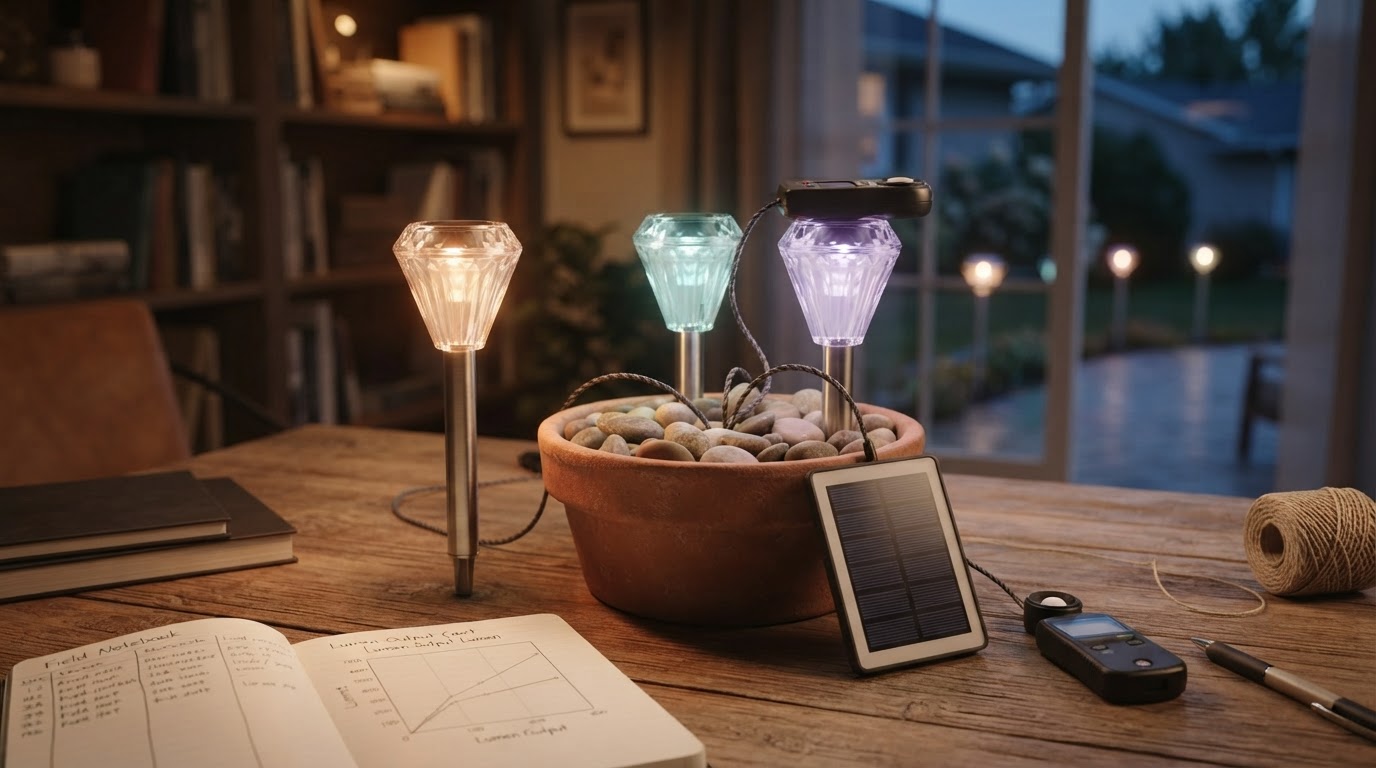
During my field test, I focused on the specific intersection of lumen output and color saturation. I noticed that many units claiming high brightness often achieve it by washing out the color, resulting in a pale pink rather than a deep red. When evaluating Solar Garden Color Lights, I look for a minimum of 125 lumens in the white mode to ensure the hardware is capable of throwing light at least 10 feet. For instance, high-output aluminum spot lights often utilize a 3000K warm white base to anchor the RGB spectrum, providing a runtime of 8 to 10 hours on a full charge. Day three is where I noticed the first real drop-off in cheaper units; while the primary brand held a consistent 5700K cool white intensity, others flickered as the voltage dipped. What surprised me: the depth of the blue and purple tones remained visible even against moderate light pollution from neighboring streetlights. I monitored the IP rating closely during a heavy downpour on night six, and the cast aluminum housing prevented the internal condensation that typically kills the circuit boards in plastic alternatives. This level of durability is essential for anyone looking into color changing solar pathway lights or broader solar landscape lighting color options where the fixtures are exposed to ground-level moisture.
Expert tip: If you are positioning these for maximum brightness, avoid placing them directly under large trees even if the area looks bright during the day; the dappled shade significantly reduces the charge, and I found that even a 20% reduction in sunlight exposure resulted in the color fading two hours earlier than expected.
What I'd do differently next time is group the fixtures closer together to create overlapping pools of light, which enhances the perceived brightness more than a single high-lumen unit ever could. For those prioritizing Solar Garden Color Lights for year-round yard aesthetics, matching the color temperature to your existing architectural lighting is the key to a professional look. You can further explore the nuances of these setups in our guide on solar landscape lighting color options.
Shop Solar Garden Color Lights.
Sources
- Modern Solar Spot Light | Cast Aluminum | Bright White or Warm ...
- Outdoor Solar Lights - Super Bright LEDs
- The 10 Best Outdoor Solar Lights of 2026 The Spruce Has Tested