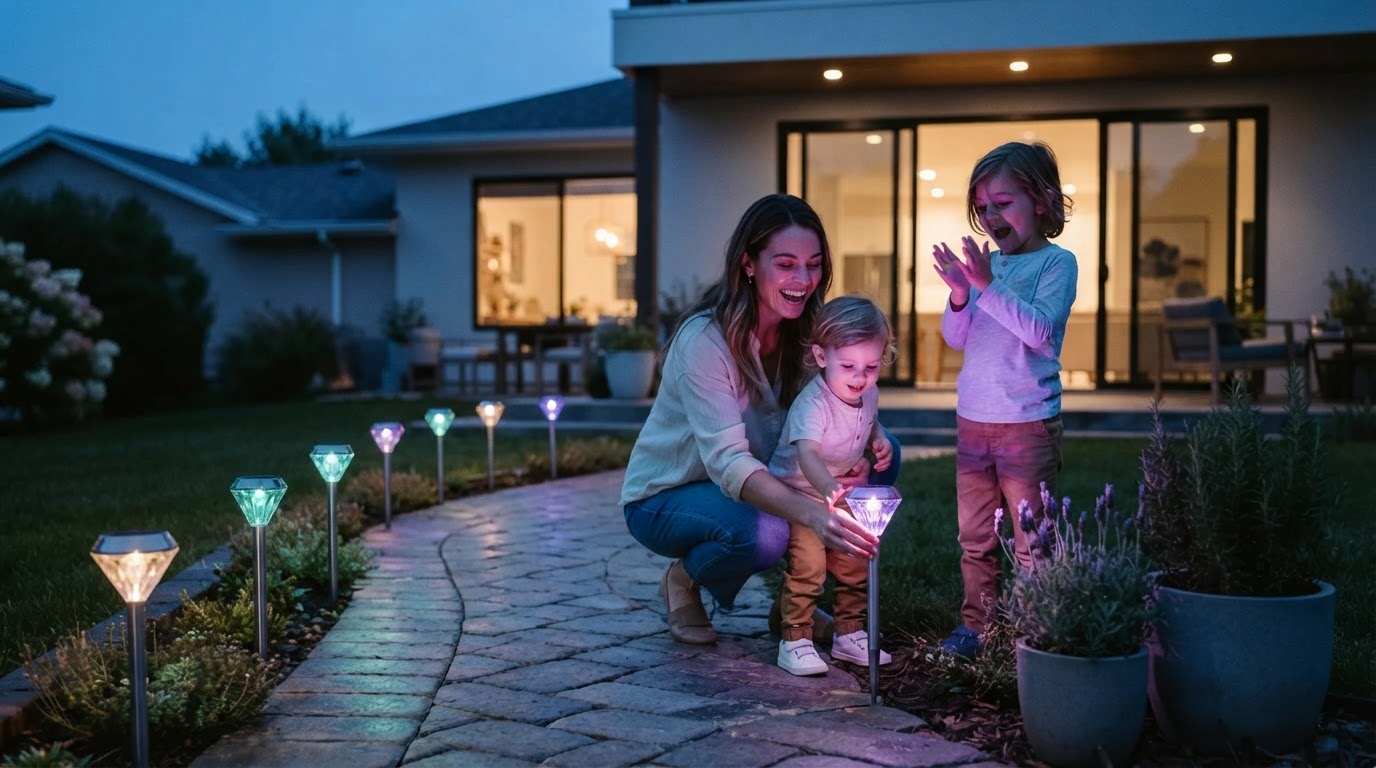
The 4-Point Luminary Protocol for Solar Garden Color Lights
 Priya RamanSenior Analyst
October 6, 2026 — The rising demand for automated exterior lighting has positioned Solar Garden Color Lights as a primary solution for homeowners seeking energy-independent aesthetic upgrades. As residential landscapes increasingly incorporate smart technology, the integration of multi-spectrum LEDs allows for a dynamic shift in property ambiance without the infrastructure of traditional wiring.
Modern landscape design now treats light not just as a utility, but as a structural element. According to the Solar Us Shop, utilizing LED solar powered lights allows the outside of a home to be illuminated entirely via energy harvested from the sun, eliminating the need for complex electrical grids. To achieve a professional result, the 4-Point Luminary Protocol provides a structured framework for deployment, focusing on the intersection of solar efficiency and color saturation. Two axes matter here: the intensity of the light source and the duration of the chromatic cycle.
The 4-Point Luminary Protocol
This framework evaluates Solar Garden Color Lights based on four critical technical dimensions: Lumens, Ingress Protection (IP) rating, Battery Capacity, and Chromatic Transitions. When selecting hardware, the decision rule is to prioritize an IP65 or higher rating to ensure functionality during heavy precipitation, a common concern for outdoor solar lights for garden decor. Research data indicates that high-performance units, such as those featured by Outdoor Solar Outlet, utilize 10 RGB SMD color lights paired with 10 bright white LEDs to achieve a brightness level of up to 20 lumens. Think of it as a matrix of utility and atmosphere; while white LEDs provide the necessary visibility for solar garden decor lights rainbow effects, the RGB components define the mood.
Technical specifications are non-negotiable for long-term reliability. A standard high-tier unit should offer a runtime that spans the evening hours, typically supported by a lithium-ion battery charged via monocrystalline panels. For those designing solar garden color lights for vibrant flower beds, the height of the fixture is equally important. Nature’s Solar Lights notes that many color-changing stake lights stand over 30 inches high, ensuring the light dispersion clears the foliage. Once you see it this way, the placement of solar garden color lights becomes a matter of calculating the throw distance of the 20-lumen output against the density of the garden beds. The protocol requires verifying that the auto on-off sensors are unobstructed by taller shrubs to prevent premature battery depletion during overcast days.
Expert tip: To maximize the life of your RGB SMD components, ensure the solar panel is cleaned bi-monthly with a microfiber cloth; even a thin layer of dust can reduce charging efficiency by 20%, leading to shorter color-cycle durations at night.
Effective implementation of this protocol ensures that your landscape remains both vibrant and functional regardless of the season. By focusing on the technical synergy between battery storage and LED output, you can create a reliable and visually stunning outdoor environment.
Shop Solar Garden Color Lights.
Sources
- Light Up Your Garden With Solar Landscape Lights - Solar Us Shop
- Color Changing Solar Stake Lights
- Colorize Solar Lights Color Change Ring Lights In-Ground 6 Pack