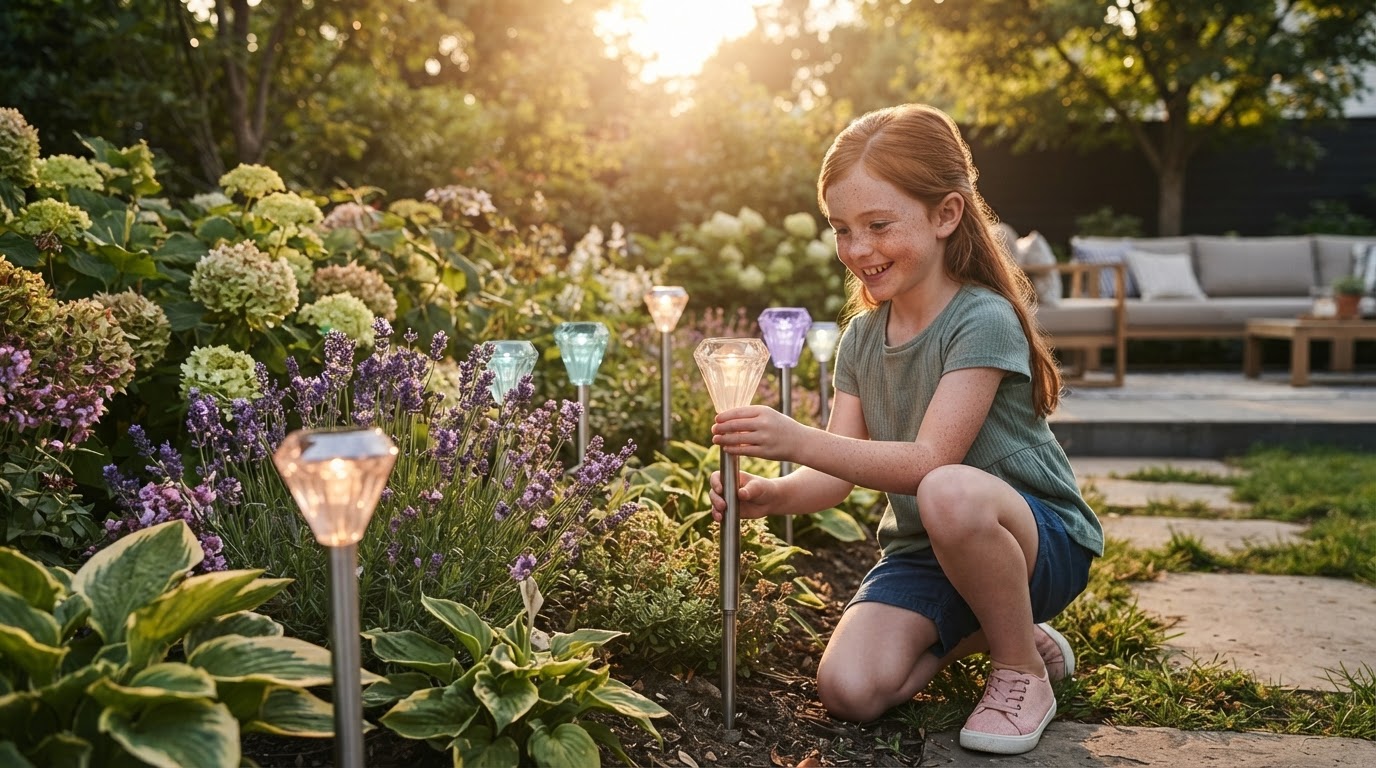
Solar Garden Color Lights Floral Arrangement Strategy
 Jordan HaleStaff Writer
September 7, 2026 — The shift toward vibrant, low-maintenance outdoor aesthetics has placed Solar Garden Color Lights at the center of modern backyard design. As homeowners look for ways to extend the visual life of their perennials after sundown, the integration of waterproof multi color solar lights has become a defining trend in residential landscaping.
Walking through my backyard at dusk, the first thing I noticed was how the evening shadows usually swallow the hydrangeas, leaving the space feeling flat and unfinished. According to recent search data regarding solar landscape lighting color options, consumers are increasingly moving away from static white bulbs in favor of dynamic RGB solar spotlights for yard displays that mimic the natural hues of the flora they illuminate. By treating light as a structural element rather than a utility, a garden transforms from a dark patch of earth into a layered, three-dimensional gallery.
The 4-Step Floral Illumination Framework
Photo by Maximilian Müller on Pexels
To achieve a balanced look, I focus on the depth and texture of the foliage. The process begins with identifying the primary visual anchors—usually the tallest shrubs or the center of a dense flower bed. It turns out that positioning the light source at a 45-degree angle toward the base of the plant creates a soft wash that highlights the veins of the leaves without washing out the natural pigment. The technical specifications of modern units facilitate this; these waterproof multi color solar lights are designed to withstand significant moisture, maintaining a consistent output even during heavy seasonal rains. When I integrated these into my own best solar lights for flower beds color layout, I prioritized units that offer high-efficiency solar panels to ensure the batteries remained charged for at least eight to ten hours of runtime. This duration is critical for maintaining the decorative color solar lights for yard aesthetic throughout the entire night. I also experimented with the solar powered rainbow garden lights to see how shifting spectrums interacted with different petal colors, finding that cool blues and purples tend to recede while warm reds and oranges bring the foreground forward. This layering technique is especially effective when working on a solar garden color lights for fairy garden design, where the scale is smaller and the need for precise color placement is higher. By staggering the heights of the stakes, you avoid the 'runway' effect and instead create a natural, dappled glow that feels organic to the space.
Expert tip: To maximize the lifespan of your setup, ensure the solar sensors are cleaned with a damp microfiber cloth every two weeks to prevent dust buildup from reducing the charging efficiency of the internal battery.
I keep coming back to the way these lights change the emotional weight of the garden, turning a simple walk to the mailbox into a curated experience of color and shadow.
Shop Solar Garden Color Lights.