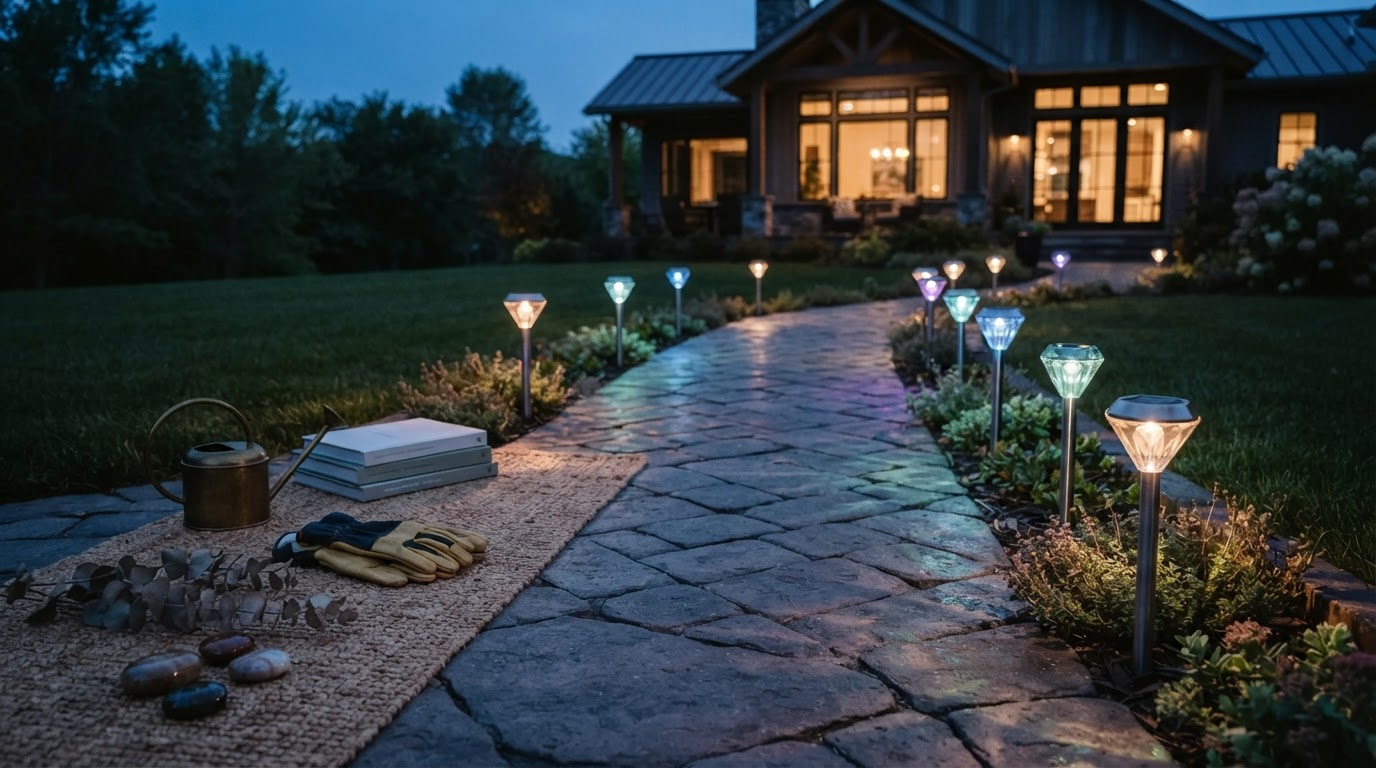
Applying Solar Garden Color Lights to Holiday Landscapes
 Priya RamanSenior Analyst
September 21, 2026. This analysis details the technical and aesthetic considerations for implementing seasonal illumination using Solar Garden Color Lights. It is designed for homeowners seeking sustainable, high-performance alternatives to traditional wired holiday displays.
Selecting holiday lighting requires a structured approach to balance luminosity, color accuracy, and energy autonomy. Think of it as a matrix of duration and intensity. When evaluating hardware, two axes matter here: the charging efficiency during shorter winter daylight hours and the specific chromaticity of the LEDs. Unlike standard white lighting, holiday-specific applications demand high-saturation reds, greens, and blues that maintain their hue without washing out. The goal is to move beyond simple illumination toward a calibrated seasonal atmosphere that functions independently of the power grid.
The Seasonal Constraints of Outdoor Illumination
Transitioning to solar-powered holiday displays presents unique challenges that differ from summer landscaping. The primary obstacle is the decrease in peak sun hours during the late autumn and winter months, coupled with the increased demand for longer run times as nights lengthen. According to Silicon Solar, high-quality holiday colored string lights are engineered to illuminate for 5 to 14 hours even with green wiring and blinking LED configurations, provided they utilize efficient charging circuits. This variability in run time highlights the importance of battery capacity and solar panel conversion rates.
Standard consumer-grade lights often fail during the holiday season because they lack the necessary weatherproofing to handle sleet, snow, and freezing temperatures. Search trends indicate a high volume of queries for waterproof multi color solar lights, suggesting that durability is a primary concern for users in temperate climates. The shift toward multi color solar garden lights reflects a desire for versatility, where a single fixture can serve both as a standard path light and a festive accent. However, achieving this versatility requires a focus on the ingress protection (IP) rating and the quality of the crystalline silicon used in the solar cells. Without these technical safeguards, the transition from late autumn to mid-winter can lead to premature battery failure or moisture intrusion.
Technical Integration of Solar Garden Color Lights
Solar Garden Color Lights addresses these seasonal challenges through specialized component selection and light distribution patterns. The brand focuses on the intersection of aesthetic flexibility and hardware resilience. One of the primary advantages of these systems is the inclusion of RGB (Red, Green, Blue) modules that allow for specific color targeting. While outdoor color changing solar lights are often viewed as novelty items, their application in a holiday context is highly strategic. By utilizing specific wavelengths, users can create the traditional red and green palettes of December or the vibrant purples and oranges of October without changing physical hardware.
Performance in low-light conditions is the most critical metric. The use of 100 LED string configurations or high-output stake lights ensures that the landscape remains visible even in dense fog or snow. For instance, Quntis notes that vibrant colors and long-lasting performance are essential for lights intended for trees and patios, particularly during the winter months. When integrating solar powered rainbow garden lights, the focus shifts to the transition speed and color blending. High-quality controllers within Solar Garden Color Lights ensure that color cycles are smooth rather than jarring, which is a common complaint with lower-end multi-color products. Furthermore, the use of solar landscape lighting multi color stakes provides a structured perimeter to a property, defining boundaries when the natural landscape is dormant or covered in snow.
A Framework for Seasonal Light Selection
Once you see it this way, the process of selecting holiday lighting becomes a matter of technical alignment rather than guesswork. The decision rule: prioritize battery density and panel surface area over the sheer number of LEDs to ensure the lights remain active through the darkest hours of the solstice. A higher number of LEDs on a small battery will lead to early-evening shutoffs, defeating the purpose of a holiday display. Instead, look for units that offer a balanced ratio of energy collection to consumption.
To ensure a successful holiday implementation, follow this technical checklist:
- Verify the IP65 or higher waterproof rating to withstand snowmelt and heavy winter rain.
- Select fixtures with monocrystalline solar panels, which offer higher efficiency in low-light conditions compared to polycrystalline alternatives.
- Ensure the light temperature or color output matches existing seasonal decorations for visual consistency.
- Opt for units with integrated light sensors that automate the dusk-to-dawn cycle, minimizing manual intervention in cold weather.
- Confirm the inclusion of high-capacity lithium-ion or NiMH batteries designed for deep-cycle discharge.
- Evaluate the mounting hardware for stability in frozen or saturated soil conditions, particularly for solar powered rainbow garden lights.
Effective holiday lighting requires a balance of technical durability and visual impact. By selecting high-performance components, you can ensure a reliable and vibrant display throughout the season.
Shop Solar Garden Color Lights here.
Sources
- Light Up Your Garden With Solar Landscape Lights - Solar Us Shop
- Solar Holiday Colored String Lights -10ft LED Long Lasting for Cloudy ...
- Xmas Solar Lights - Quntis