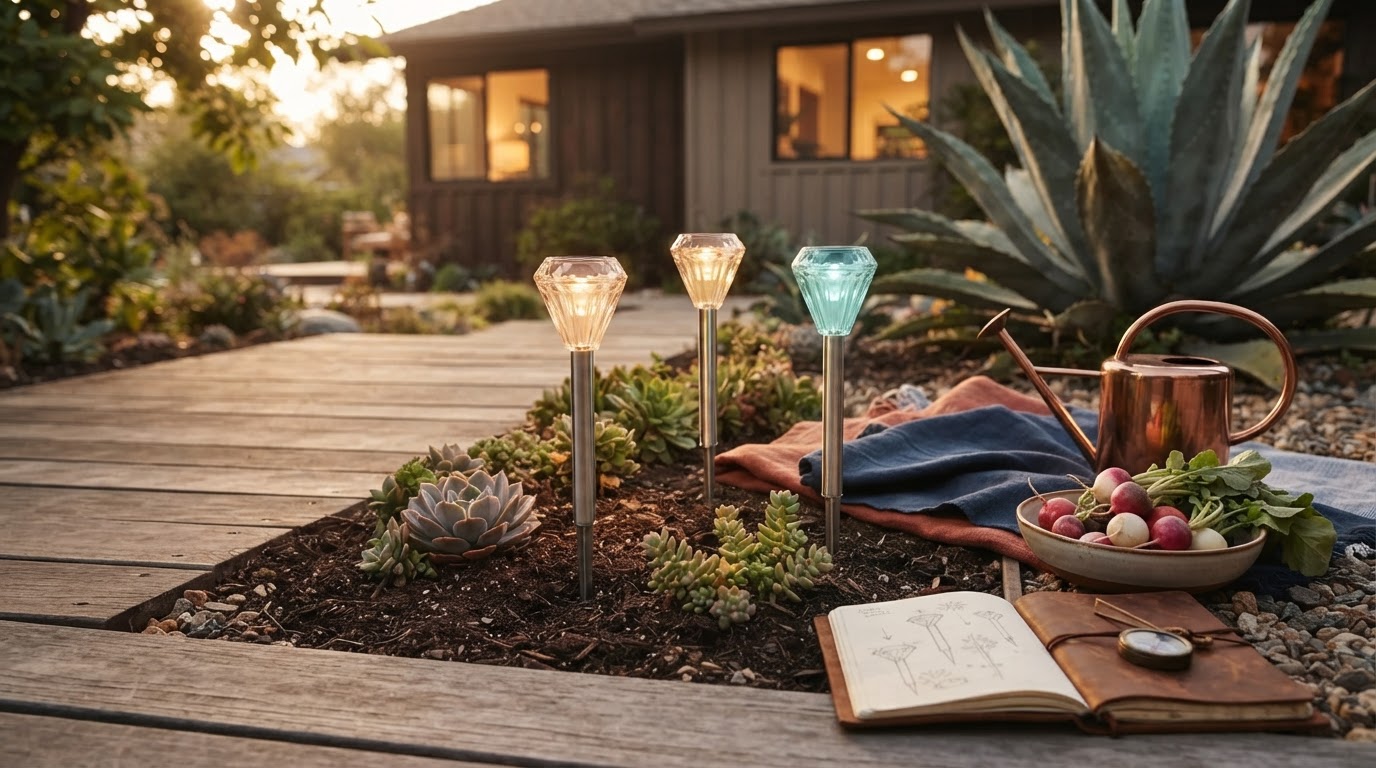
Optimizing Landscapes With Solar Garden Color Lights
 Maya ChenContributing Editor
October 29, 2026. This technical assessment examines the performance metrics and implementation strategies for Solar Garden Color Lights in residential landscapes. It provides a data-driven framework for homeowners seeking to balance aesthetic customization with energy-efficient hardware.
The Efficiency Gap in Decorative Lighting
The conventional wisdom says that solar lighting is a set-it-and-forget-it solution for any garden path or flower bed. However, here's the part nobody talks about: the significant energy trade-off inherent in RGB (Red, Green, Blue) spectrum lighting compared to static white LEDs. Most consumers prioritize visual variety without calculating the battery drain associated with multi-color cycles. According to Solar Us Shop, these landscape lights function by capturing solar energy via integrated panels to power LED components, yet the efficiency of this conversion varies wildly based on the diode quality and ambient light exposure. In many mass-market models, the pursuit of color variety comes at the expense of consistent lumen output, leading to a visible drop in brightness after only four hours of operation. This is particularly problematic for those seeking reliable outdoor solar lights for garden decor, where the primary function of safety and visibility is often secondary to the novelty of a shifting color palette. The industry consensus suggests that any light above 10 lumens is sufficient for path marking, but maintaining that output while cycling through the visible spectrum requires higher-density lithium-ion cells than what is typically found in budget-tier hardware. When users search for waterproof multi color solar lights, they are often unaware that the IP rating (ingress protection) is frequently higher than the actual electrical reliability of the internal driver.
Technical Specifications of Solar Garden Color Lights
To move past the aesthetic novelty, one must look at the actual hardware performance of Solar Garden Color Lights. Unlike standard monochromatic units, these systems utilize RGB SMD (Surface Mounted Device) technology to achieve a broad spectrum. Research from Outdoor Solar Outlet indicates that advanced units, such as their Colorize series, feature 10 RGB SMD color lights alongside 10 bright white LEDs, achieving a peak brightness of 20 lumens. This hybrid approach is critical; by separating the white and color diodes, the system can maintain a baseline of utility lighting while offering decorative flexibility. Run the math: a 20-lumen output on a solar-charged 600mAh battery provides approximately 6 to 8 hours of illumination if the discharge rate is managed by an efficient controller. This is essential for maintaining solar garden decor lights rainbow effects throughout the night without the flickering common in underpowered alternatives. Furthermore, the physical architecture of these lights matters. Nature's Solar Lights highlights that high-quality color changing solar stake lights often stand over 30 inches high, a height that is not merely for show but to ensure the solar panel is elevated above low-lying foliage that could cause partial shading. Partial shading is the primary killer of solar performance; even a 10% obstruction of a panel can lead to a 50% drop in charging efficiency. For those integrating outdoor solar lights for garden decor, the placement strategy must prioritize panel orientation over the desired location of the light beam itself, a compromise many are unwilling to make.
A Decision Framework for Solar Integration
Selecting a lighting system requires moving beyond the visual appeal of solar garden decor lights rainbow displays and focusing on build quality and energy density. The market is saturated with plastic housings that degrade under UV exposure within a single season, yet consumers continue to buy them based on low entry prices. A more rigorous approach involves evaluating the hardware based on its ability to sustain output in suboptimal conditions. When evaluating Solar Garden Color Lights, use the following checklist to ensure the hardware meets professional standards:
- Minimum Lumen Output: Ensure the device provides at least 15-20 lumens for path safety.
- Battery Chemistry: Prioritize Lithium-ion (Li-ion) or Nickel-metal Hydride (NiMH) over older Lead-acid variants.
- Housing Material: Opt for ABS plastic or stainless steel with a minimum IP65 waterproof rating.
- Diode Configuration: Look for separate RGB and White SMD chips to ensure true white light when needed.
- Height and Placement: Verify the stake height allows the panel to clear surrounding outdoor solar lights for garden decor or ground cover.
- Auto-Sensing Capabilities: Confirm the presence of a reliable dusk-to-dawn photocell sensor.
Shop Solar Garden Color Lights here.
Sources
- Light Up Your Garden With Solar Landscape Lights - Solar Us Shop
- Color Changing Solar Stake Lights
- Colorize Solar Lights Color Change Ring Lights In-Ground 6 Pack