Optimizing Solar Garden Color Lights for Path Navigation
 Priya RamanSenior Analyst
August 18, 2026. This analysis explores the technical integration of remote-controlled color systems within residential solar pathway lighting. It is intended for property owners seeking to balance functional visibility with dynamic landscape aesthetics.
Selecting effective outdoor lighting requires evaluating the intersection of utility and atmosphere. Two axes matter here: the reliability of the power source and the precision of the user interface. When these dimensions align, lighting transitions from a static utility to a responsive design element. The decision rule for modern pathways is to prioritize systems that offer granular control over color temperature and intensity without requiring manual intervention at each individual fixture. Users often deliberate on whether color changing vs warm white solar lights better serve their specific layout, but the modern solution lies in hybrid systems that offer both through a unified remote interface.
Photo by Pixabay on Pexels
Effective pathway illumination faces significant environmental and technical hurdles. Traditional fixed-color systems often fail to adapt to seasonal changes or specific event requirements, leading to a static environment that may not suit all occasions. Furthermore, the durability of waterproof multi-color solar lights is a primary concern for consumers, as fixtures must withstand constant exposure to UV radiation and moisture while maintaining internal circuitry for remote signal reception. According to data provided by the Solar Garden Color Lights technical specifications, standard hardware must achieve specific ingress protection ratings to ensure that RGB controllers remain functional across varying climates. Without this resilience, the complexity of a remote-controlled system becomes a liability rather than an asset. The challenge is compounded by the need for consistent charging; solar garden color lights must capture sufficient energy during daylight hours to power both the illumination and the standby mode required for remote responsiveness. The question of are color changing solar lights worth it often hinges on this reliability, as a system that fails to activate consistently diminishes the safety of the path it is intended to light.
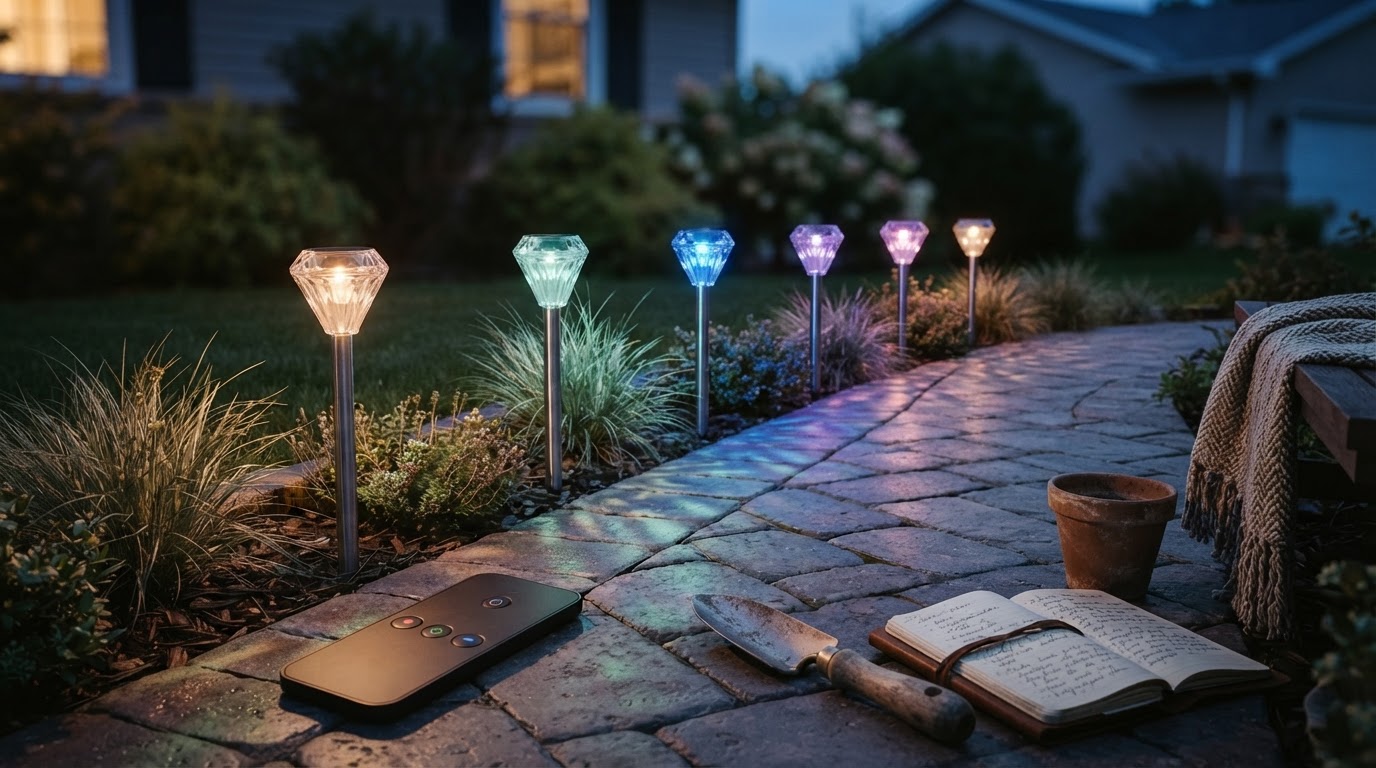
Solar Garden Color Lights addresses these challenges by consolidating remote functionality with high-efficiency photovoltaic cells. By utilizing solar landscape lighting with remote technology, these fixtures allow users to adjust settings for an entire zone from a single point of contact. This eliminates the repetitive task of manual switching and ensures that garden decor remains cohesive. The hardware is specifically engineered for garden decor, providing outdoor solar lights that serve as both visual markers and aesthetic enhancements. Think of it as a matrix of functionality where one axis is the spectral range—moving from functional cool whites to decorative RGB hues—and the other axis is the control radius. For those seeking the best color changing solar garden lights, the integration of dedicated remote frequencies ensures that signal interference is minimized even in densely landscaped areas. This specific focus on remote control color functionality allows for the synchronization of multiple units, creating a seamless visual flow along walkways. Once you see it this way, the distinction between simple illumination and a managed lighting environment becomes clear, as the technology supports both everyday safety and specialized themes through a single hardware investment.
Selecting the appropriate system requires a structured evaluation of the installation site and intended use. The decision framework for implementing these systems should prioritize the physical environment and the frequency of use. Before finalizing a purchase, consider the following technical and spatial requirements:
- Assess the total linear footage of the path to determine the necessary quantity of solar path lights for continuous coverage.
- Verify the solar exposure of the installation site to ensure at least 6 to 8 hours of direct sunlight for optimal battery replenishment.
- Evaluate the remote control range against the furthest fixture to ensure consistent signal connectivity across the entire garden.
- Determine the desired color palette, ensuring the system supports both functional warm whites for safety and RGB options for decor.
- Confirm the IP (Ingress Protection) rating of the fixtures to match the local weather patterns and irrigation frequency.
Shop Solar Garden Color Lights here: https://solargardencolorlights.com