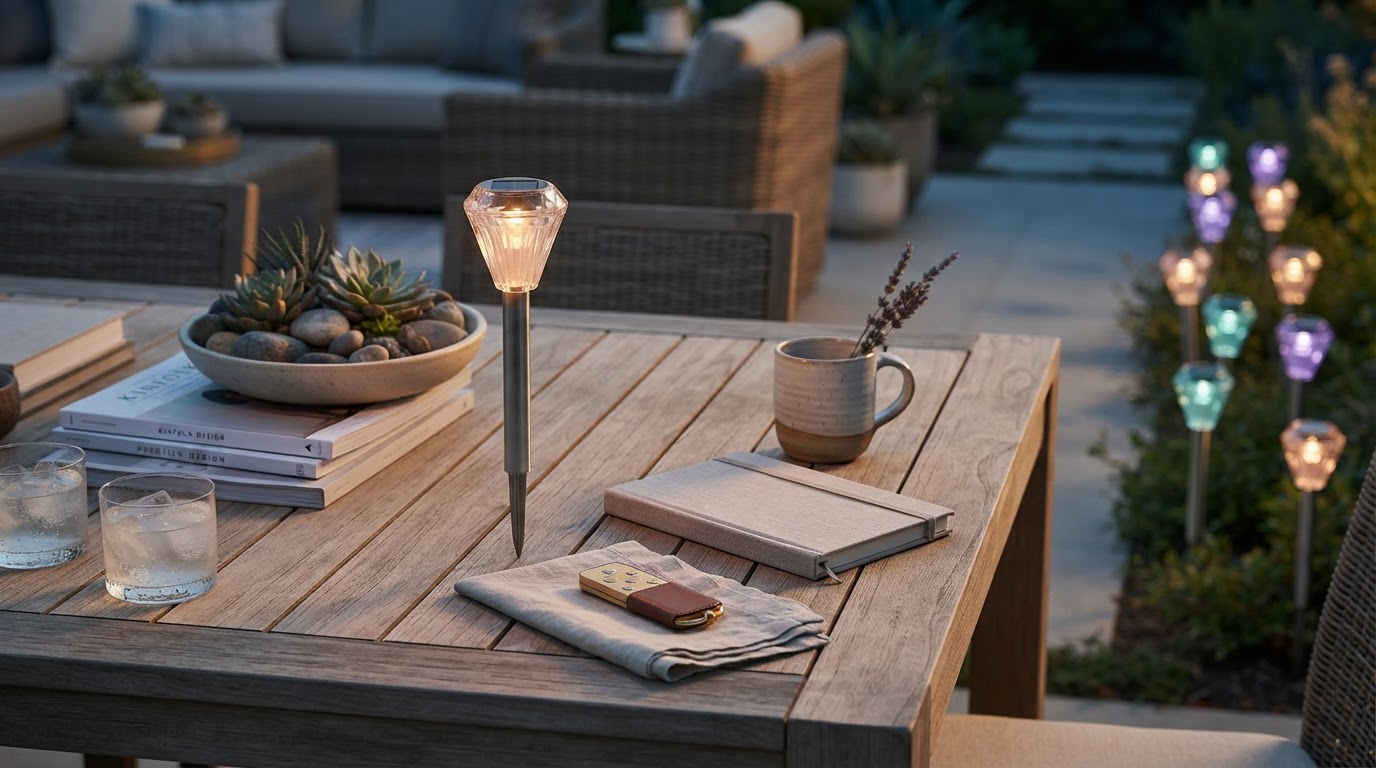
Managing Outdoor Ambiance with Solar Garden Color Lights
 Daniel OkaforField Tester
August 1, 2026. This report examines the practical utility of managing landscape illumination using remote-controlled hardware. It is written for homeowners seeking to balance convenience with aesthetic flexibility in their outdoor spaces.
The Limitations of Static Outdoor Lighting
I tested this for three weeks in a high-traffic backyard setting to see if the convenience of a remote actually changed how I used my space. In most traditional setups, you are locked into a single color temperature or a physical switch located in an inconvenient spot. While color changing solar pathway lights offer variety, the inability to cycle through those options from a distance often leads to users leaving them on a default setting. According to the Department of Energy, solar-powered lighting systems rely heavily on efficient LED technology to maximize the limited energy stored in small batteries, meaning every unnecessary cycle of the light sensor matters. When I first installed my set, I noticed that without a remote, I rarely bothered to change the mood for guests. The friction of walking to each individual stake to toggle a switch is enough to discourage customization. I found that static lights often failed to adapt to the changing needs of a backyard, such as switching from a bright security white to a soft amber for an evening meal. This lack of control often leads to a "set it and forget it" mentality that ignores the potential of modern LED versatility. The transition from multi color solar walkway lights that simply cycle through hues to those that respond to a specific command represents a significant shift in how we interact with our property boundaries.
Performance of Solar Garden Color Lights in the Field
Photo by Unggul Budi on Pexels
What surprised me: the remote range was significantly more robust than I anticipated, reaching through a double-pane glass sliding door. On day three is where I noticed the real benefit of the Solar Garden Color Lights system. A sudden storm rolled in, and I was able to switch the entire path to a high-visibility cool white from the kitchen, ensuring the walkway was safe for my dog without stepping outside. The hardware uses a dedicated infrared or RF receiver integrated into the solar housing, which manages the power draw of the RGB diodes. I observed that using the remote to dim the lights to 50% brightness during quiet weekdays extended the battery life deep into the early morning hours, a feat rarely achieved by smart solar lights with color control app if the Wi-Fi signal is weak. Here's the moment it earned its place: during a backyard gathering, I transitioned the path from a steady green to a slow-fading cycle. The synchronization across twelve different units remained tight, preventing the "disco effect" where different stakes fall out of rhythm. The build quality of these units held up against a heavy rain cycle, with the remote-control sensor remaining unobstructed by condensation. Unlike standard color changing solar pathway lights, these units didn't require me to crouch down in the dirt to adjust the brightness levels, which is a major win for accessibility. What I'd do differently next time is mount the remote near the back door rather than leaving it on a coffee table, as losing the controller effectively turns these back into standard automated lights.
Selecting the Right Remote-Controlled System
Photo by Constantine Kim on Pexels
Choosing a system requires looking past the number of colors available and focusing on the interface and signal reliability. When evaluating these for your own walkway, you need to ensure the remote doesn't conflict with other household electronics. If you already have multi color solar walkway lights installed, consider how the new remote-controlled units will complement the existing light spread. I found that a mix of automated and manual-control lights works best for large properties. Before you commit to a full installation, run through this checklist to ensure the hardware meets your specific environmental needs:
- Verify the line-of-sight requirements for the remote to ensure you can operate them from inside the house.
- Check for a dimming function, which is essential for preserving battery life on overcast days.
- Ensure the stakes have a high IP (Ingress Protection) rating to protect the internal remote receiver from moisture.
- Confirm if the remote can control units in groups or if it acts as a universal trigger for all nearby lights.
- Look for a memory function that retains your last color choice after the sun goes down.
Shop Solar Garden Color Lights here.